
Dylan Field Investments: The Thiel Fellow Who Built Figma From a Dorm Room Idea to a $68 Billion IPO
.png)
Brian Nichols is the co-founder of Angel Squad, a community where you’ll learn how to angel invest and get a chance to invest as little as $1k into Hustle Fund's top performing early-stage startups
Dylan Field grew up in Penngrove, California, and showed up to Brown University in 2010 already thinking about how to make design accessible to people who weren't trained designers. He left before finishing his degree when he won a Thiel Fellowship in 2012, a $100,000 grant given to young entrepreneurs willing to leave school and build instead.
The choice was not obvious. Field had already been a LinkedIn intern, a Microsoft research assistant, and a Flipboard product design intern. He had relationships with serious investors. He still took years to find the right product.
The Figma Build
Dylan Field investments in Figma began with the $100,000 Thiel Fellowship and an initial $1.7 million seed round led by Index Ventures. The founding thesis was "Google Docs for design": a collaborative, browser-based tool that would allow design files to live in the cloud and be edited by multiple people simultaneously, rather than passing Photoshop or Sketch files around by email.
That thesis proved correct. Figma launched publicly in September 2016 after four years of building. By 2018 it was valued at $115 million. By 2021 it was valued at $10 billion after the pandemic drove millions of product teams to remote collaboration. Sequoia Capital's Series C investment in 2019 at a $440 million valuation was, by the firm's own account, one of the highest internal votes for any investment in Sequoia's history.
In September 2022, Adobe announced it would acquire Figma for $20 billion. The deal was the largest acquisition in the design software industry's history and would have given Field, then 30 years old, a multi-billion dollar payday. Regulators in the US and EU blocked the deal in December 2023 on antitrust grounds. Adobe paid Figma a $1 billion breakup fee.

What Four Years of Quiet Building Looks Like
Most founders would not have survived the four years between founding and public launch. Field has been candid that the early period was hard. Employees quit before the product shipped. Multiple investors passed. One investor told him directly that he did not know what he was doing.
The company tried multiple concepts, including software for drones and a meme generator, before converging on the collaborative design tool. The breakthrough was understanding that browser technology had advanced far enough to render design-quality graphics in real time. No one had yet built a professional design tool that lived entirely in a browser. That was the gap.
Once that insight locked in, the four years of building were about execution: making the tool precise enough for professional designers to trust it with their work. That meant solving hard engineering problems around rendering performance, real-time multiplayer collaboration, and version control that traditional desktop applications had never needed to address. It is exactly the kind of technical depth that early investors missed and that Sequoia eventually recognized as a defensible moat.
The IPO
Figma IPO'd on the New York Stock Exchange on July 31, 2025. The stock surged 250% on its debut, from an offer price of around $33 to $115.50 at close, making it the largest first-day pop for any billion-dollar tech IPO in years. The instant valuation at $68 billion was more than triple the $20 billion Adobe had offered two years earlier. Trading was temporarily halted during the session due to volatility.
Figma ended 2024 with $749 million in revenue, up 48% from 2023. In Q1 2025, revenue grew 46% year over year. As of the IPO, the company had $1.7 billion in cash and investments. Field's 9% stake valued him at approximately $6.6 billion.
Elizabeth Yin of Hustle Fund has observed that the most striking founder journeys are the ones where the founder gets multiple chances to exit and passes each time, ultimately building something worth more than any early offer. Field turned down or was blocked from a $20 billion acquisition and built a $68 billion public company instead. That kind of long-horizon conviction is what Angel Squad members learn to identify in the earliest stages of a founder's journey. Explore those frameworks at hustlefund.vc/squad.
The Angel Portfolio
Beyond Figma, Field has made 118 angel investments according to PitchBook, including recent bets in 2025 on Arcadia Medicine, a drug discovery startup, PlayerZero, a software analytics platform, and Huxe, a productivity application. He advises Roam and CodeSandbox. His angel investing reflects his product instincts applied across categories beyond design.
The Product Philosophy
Field has been public about the tension between his AI enthusiasm and his worry about AI commoditizing software. In a 2025 interview after the IPO, asked about AI's impact on Figma's category, he said: "What keeps me up at night is thinking about product, not share price." He jailbreaks AI models in his spare time because he wants to understand how they think and work.
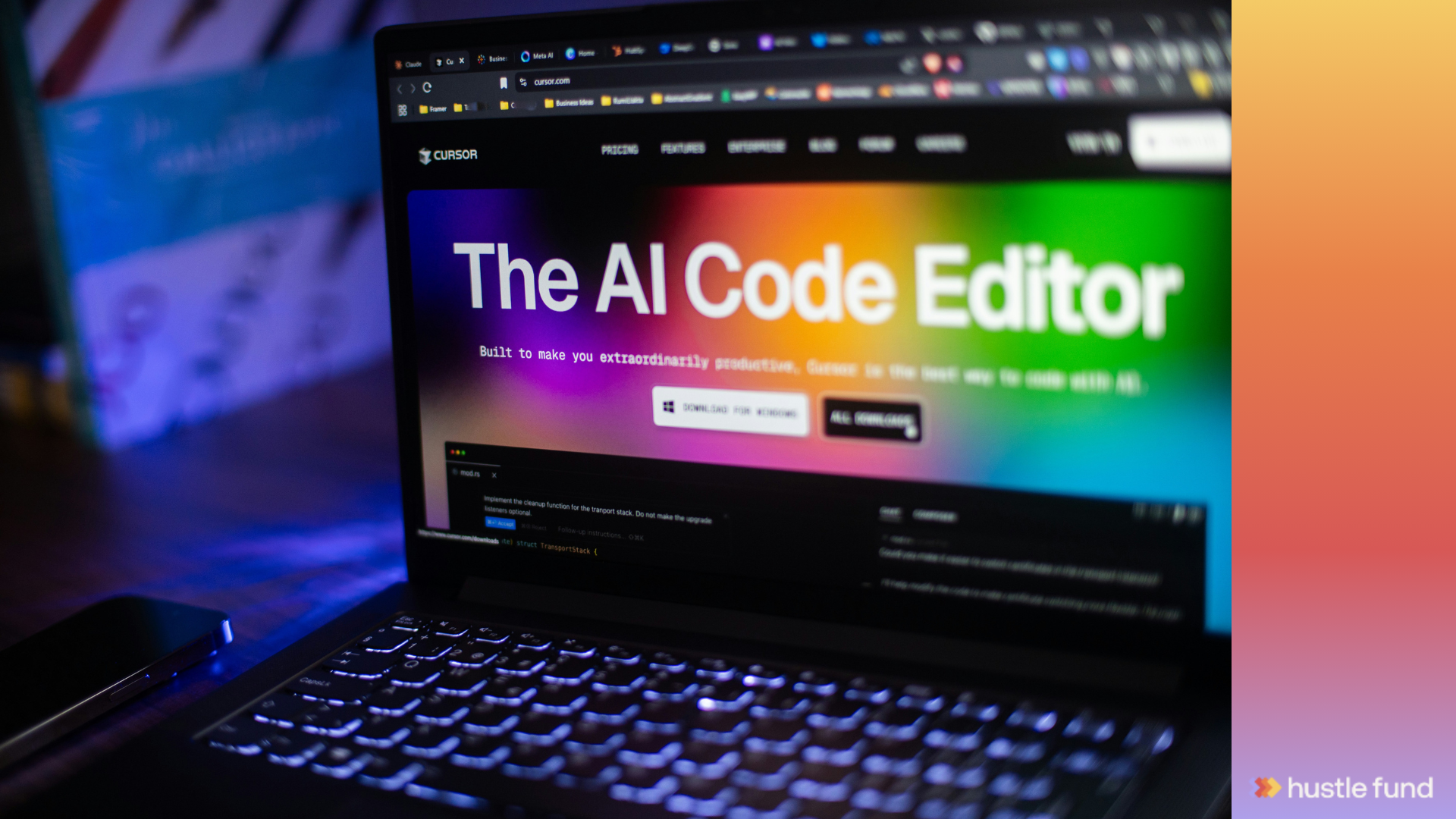
That attitude is the same one that led him to build Figma Make, a product that uses Claude 3.7 Sonnet to turn Figma designs into coded prototypes, integrating the AI layer directly into the design workflow rather than treating it as a threat. Shiyan Koh of Hustle Fund has noted that the founders who thrive through platform shifts are those who integrate the new technology into their product rather than competing against it.









.png)