
Garry Tan Investments: What Y Combinator's President Teaches About Betting on the Earliest Believers
.png)
Brian Nichols is the co-founder of Angel Squad, a community where you’ll learn how to angel invest and get a chance to invest as little as $1k into Hustle Fund's top performing early-stage startups
Garry Tan grew up in Fremont, California, the son of a Chinese Singaporean father who worked as a machine shop foreman and a Burmese-Chinese mother who was a nursing assistant. He started programming at fourteen, graduated from Stanford with a degree in Computer Systems Engineering, and became the tenth employee at Palantir Technologies, where he designed the company logo.
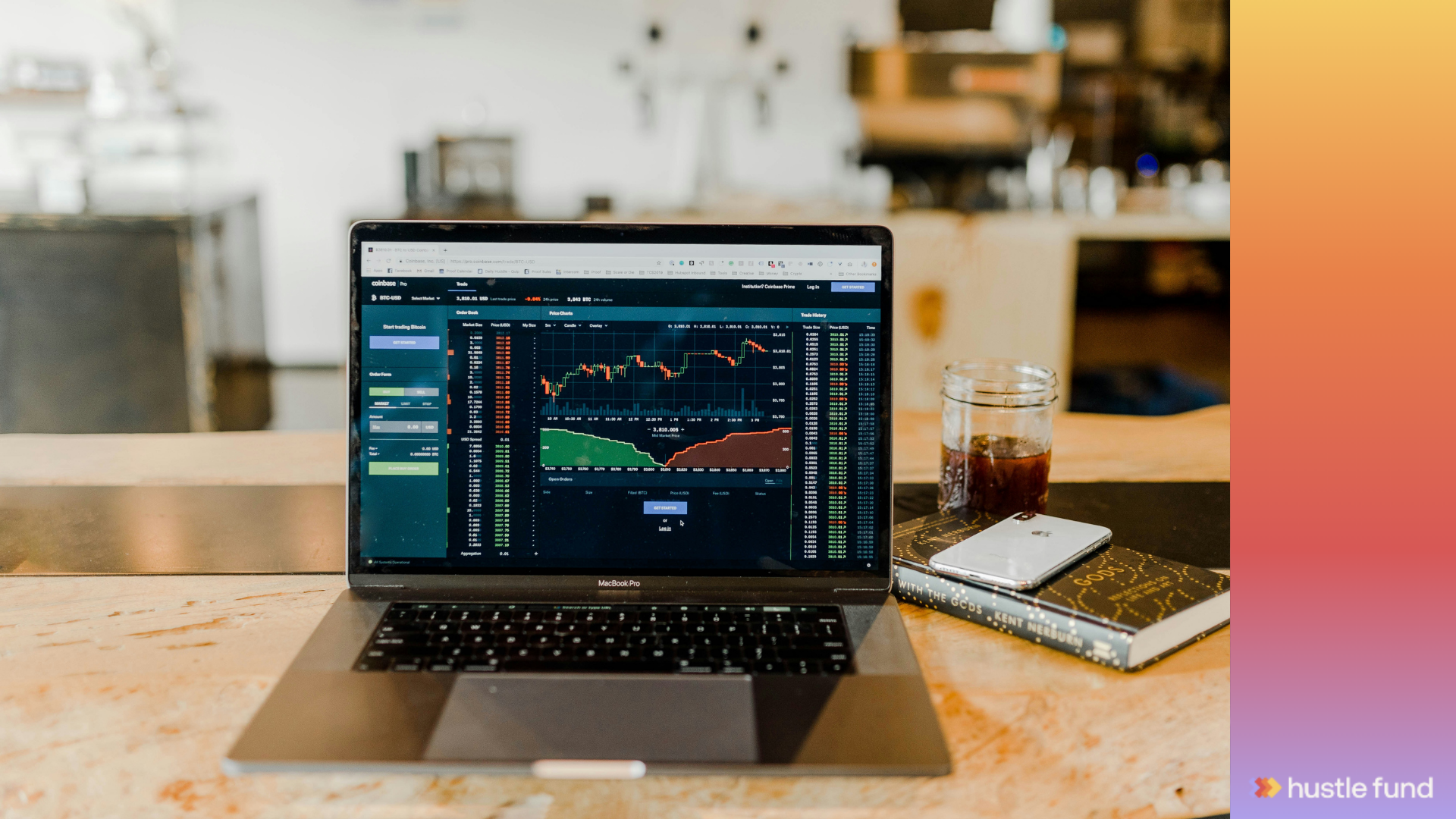
In 2008, he co-founded Posterous, a blogging platform that went through Y Combinator and was acquired by Twitter in 2012 for $20 million. That exit was small. What mattered was the path it created: Tan joined YC as a partner in 2011, and in 2012, sitting at the intersection of his own startup experience and YC's pipeline of founders, he wrote a $150,000 check into a small cryptocurrency exchange that had just come through YC's program. The company was Coinbase. Garry Tan investments have generated a reported 6,000x return on that specific check.
Initialized Capital and the Pre-Seed Thesis
In 2012, Tan co-founded Initialized Capital with Alexis Ohanian and others. The fund's thesis was specific: invest at the pre-seed stage in YC companies and companies with YC-caliber founders before any other institutional investors. The first check into Coinbase was the clearest expression of that thesis. Initialized also backed Instacart, Flexport, Opendoor, and hundreds of other companies before they were obvious.
By 2022, Initialized managed over $3.2 billion in assets across multiple funds. The performance across that period, particularly in the 2012 to 2018 vintage years, was exceptional. Tan appeared on the Forbes Midas List from 2018 through 2022. He left Initialized to return to YC as president and CEO in January 2023.
His investment in Coinbase is worth dwelling on for a moment. The $150,000 seed check in 2012 went into a company that went public in April 2021 at a $100 billion valuation. That's the kind of return that changes the entire economics of a fund, which is why early-stage investors spend so much time trying to develop the conviction to make these bets when nobody else believes in them.
Tan had operational knowledge of cryptocurrency from his time thinking about it as a YC partner. He had a relationship with Brian Armstrong from working with him during the YC batch. And he made the check.
Y Combinator Under Tan
Tan returned to YC in January 2023 at a moment when the organization was at an inflection point. He made several significant structural changes: he wound down YC's Continuity Fund, which had been investing in later-stage YC alumni companies, to refocus resources entirely on early-stage acceleration. He restructured the partnership model and initiated a fundraising effort targeting $2 billion across new funds.
YC now funds over 400 companies per batch, twice per year, at a 1% acceptance rate from a pool that includes applications from around the world. By mid-2025, YC had backed over 4,000 companies with a combined market capitalization exceeding $600 billion.
Its unicorn rate, around 4.5% to 5.5% of funded companies, is dramatically higher than the industry average of approximately 2.5%. The portfolio includes Airbnb, Stripe, Dropbox, Coinbase, Reddit, Doordash, and hundreds of other companies that have become defining technology businesses.
In June 2025, at YC's AI Startup School, Tan disclosed that 95% of the code for approximately a quarter of YC's current startups was written by AI. That disclosure captures where YC is investing its institutional attention: the question of how AI changes what a single founder can build, and what that means for the size and type of opportunities available to early-stage investors.
Elizabeth Yin, Hustle Fund GP, has talked about how the best seed accelerators are the ones that change the reference point for what a small team can accomplish, rather than just providing capital. YC's model, which puts founders in a cohort with other founders going through the same process, creates exactly this kind of peer-based learning environment.

The Earnestness Thesis
The quality Tan talks about most in describing what he looks for in founders is earnestness. Not sophistication, not polish, not the ability to give a compelling pitch. Earnestness: a genuine, almost naive belief in what they're building, and a corresponding willingness to do the work that belief requires. He has described this as the quality that separates founders who build lasting companies from founders who build for exit.
Eric Bahn, Hustle Fund GP, has talked about how the founders with the most durable companies tend to be the ones for whom the company is an expression of genuine conviction rather than a financial calculation. Tan's earnestness thesis is the YC version of the same observation, developed across thousands of founder evaluations.

Angel Squad and the Pre-Conviction Bet
Garry Tan investments demonstrate the core principle that Angel Squad is built around: the highest returns come from the earliest bets, but the earliest bets require a level of conviction that most investors don't develop until the obvious signals are already visible.
Angel Squad trains investors to develop that earlier conviction through education, deal access, and a community of peers who are making similar bets at the same stage. With 2,500 members across 50 countries, the community is specifically designed to help investors develop the pattern recognition needed to see the Coinbase before it is Coinbase. Shiyan Koh, Hustle Fund managing partner, has described this as the central challenge of early-stage investing: learning to see what isn't yet visible to the market. Visit hustlefund.vc/squad.
The Takeaway
Garry Tan built his investment track record by betting on founders before anyone else believed in them, starting with a $150,000 check into Coinbase in 2012 that generated a reported 6,000x return. He now runs the organization that has been doing this systematically for twenty years. The lesson is not about finding the next Coinbase. It's about developing the conviction framework that lets you see founders who are building things the market hasn't priced correctly, and then having the discipline to act on that conviction before the consensus catches up.









.png)