
Logan Paul Investments: The YouTuber Who Built a $1.2 Billion Beverage Brand Before 30
.png)
Brian Nichols is the co-founder of Angel Squad, a community where you’ll learn how to angel invest and get a chance to invest as little as $1k into Hustle Fund's top performing early-stage startups
Logan Paul grew up in Ohio, built a YouTube channel that peaked at around 23 million subscribers, got into boxing, fought Floyd Mayweather in an exhibition match in 2021, and parlayed his platform into one of the fastest-scaling beverage brands in consumer products history. None of that followed a traditional business school playbook, which is partly why it worked.
The PRIME Origin Story
Logan Paul investments in PRIME Hydration started with an unlikely partnership. Paul and KSI, a British rapper and YouTuber with whom Paul had engaged in two highly publicized boxing matches, announced they were launching a sports drink together in January 2022. The underlying operator was Congo Brands, a Louisville-based consumer products incubation firm run by Trey Steiger and Max Clemons. Congo held 60% of the company; Paul and KSI each held approximately 20%.
Congo's model was proven before PRIME: identify high-reach creators, build a beverage brand around them, and use the creator's audience as the distribution engine. Paul and KSI had a combined subscriber count north of 60 million across platforms when PRIME launched. What they did to distribution timelines was startling.
PRIME shipped $250 million in retail sales in its first year, 2022. By 2023 it crossed $1.2 billion in revenue, becoming one of the fastest consumer beverage brands to reach that milestone. Partnerships came fast: Arsenal FC signed in July 2022, Barcelona and Bayern Munich signed in 2023, UFC announced in February 2023, the LA Dodgers became an official partner, and WWE center-ring sponsorship followed. Patrick Mahomes and Erling Haaland became endorsers. At its peak, PRIME was reportedly valued between $3 and $8 billion, making Logan Paul's stake worth $600 million to $1.6 billion on paper.
The Correction
By October 2025, PRIME's revenue had dropped to a projected $300 million, a 76% decline from the $1.2 billion peak. In the UK, revenue fell from £112 million in 2023 to £32 million in 2024, a 71% drop. UK pre-tax profits collapsed from £4.3 million to under £1 million. Bottles that had been reselling among UK schoolchildren for £100 were clearing at 31p at Tesco.
The correction was partly structural. PRIME entered a brutally competitive $25 billion sports drink market without a product differentiation story that could hold up beyond novelty. Gatorade's $7.5 billion in annual US sales makes it nearly six times larger than its nearest competitor. PRIME's BCAAs, electrolytes, and coconut water formulation did not meaningfully differentiate from established and cheaper alternatives once the hype cycle cooled.
The lesson for early-stage investors is not that PRIME failed. It generated real cash, paid real revenues, and created real enterprise value. The lesson is about the difference between virality-driven demand and product-driven demand.
Elizabeth Yin of Hustle Fund has been consistent about this: the best early-stage consumer investments show genuine retention and willingness-to-pay from customers who found the product through something other than the founder's platform. Angel Squad members apply that filter to every consumer pitch. Join the conversation at hustlefund.vc/squad.

The Angel Investor Ambitions
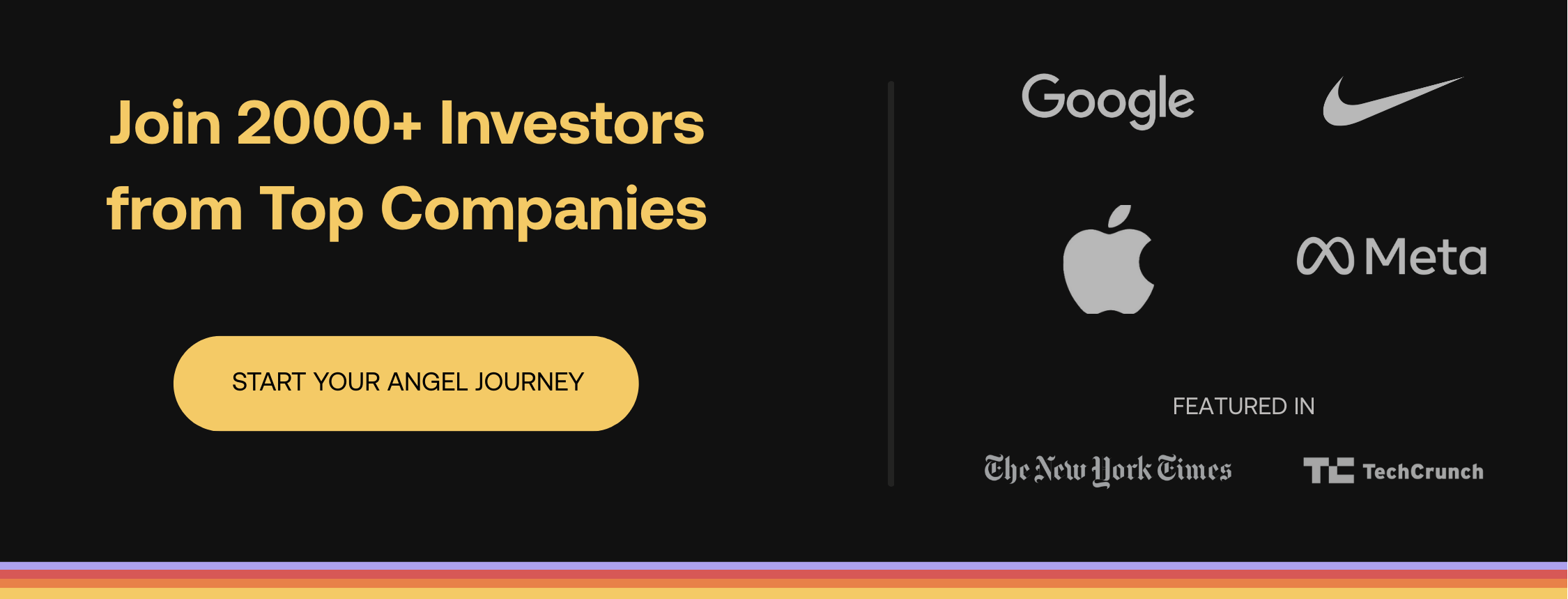
Beyond PRIME, Logan Paul has been public about wanting to build a broader investment portfolio. His Series B investment in Lolli, the Bitcoin rewards app, in December 2023 signals interest in fintech and crypto-adjacent consumer products. His media company generates enough revenue from sponsorships and advertising across Impaulsive and his YouTube channels that he has capital to deploy without depending on PRIME distributions.
At 28 years old as of 2024, Paul has the most valuable asset any investor can have: time. Even if PRIME represents a cautionary tale about the sustainability of virality-driven demand, the exit structure of Paul owning 20% of a brand that briefly reached .2 billion in revenue is already commercially significant. Angel Squad members studying celebrity-brand investing should track what Paul does next, not just what PRIME did at its peak. The frameworks around audience-to-brand conversion are still early and evolving. See how Angel Squad members evaluate these deals at hustlefund.vc/squad.
The Broader Logan Paul Portfolio
Beyond PRIME, Logan Paul holds an investment in Lolli, a Bitcoin rewards app that closed a Series B in December 2023. He has used his podcast Impaulsive, which regularly ranks among the top-streamed shows, to build a media platform worth significant advertising revenue.
He co-founded a professional wrestling venture with KSI and has been an active ambassador for the WWE, including appearing in WrestleMania events. His WWE involvement is both an income stream and a brand extension that keeps his platform audience engaged.
What PRIME Actually Teaches
Shiyan Koh of Hustle Fund has noted that the most instructive investment stories are the ones that capture both the upside and the limits of a model. PRIME captured both. The influencer-brand model can generate extraordinary short-term revenue.
It struggles to create durable brand equity without product differentiation that stands independently of the creator. The next iteration of that model, which PRIME's trajectory is already informing, will need to answer the retention question earlier.







.png)