
Vinod Khosla Investments: The Sun Microsystems Co-Founder Who Bets on "Science Experiments"
.png)
Brian Nichols is the co-founder of Angel Squad, a community where you’ll learn how to angel invest and get a chance to invest as little as $1k into Hustle Fund's top performing early-stage startups
Vinod Khosla grew up in India dreaming of being an entrepreneur after reading about Intel at 16. His father was an army officer who wanted him to join the military. Khosla had other plans. He studied electrical engineering at IIT Delhi, got a master's in biomedical engineering at Carnegie Mellon, and earned an MBA from Stanford. In 1982, he co-founded Sun Microsystems.
Sun went from zero to $1 billion in annual sales in five years. Khosla was its founding CEO and pioneered open systems and commercial RISC processors. In 1986 he moved to Kleiner Perkins as a general partner. In 2004, he founded Khosla Ventures to give himself more freedom to make aggressive, unconventional bets.
The Portfolio
Vinod Khosla investments through Khosla Ventures span artificial intelligence, climate technology, healthcare, and frontier science. The firm manages approximately $16 billion in assets under management as of 2025.
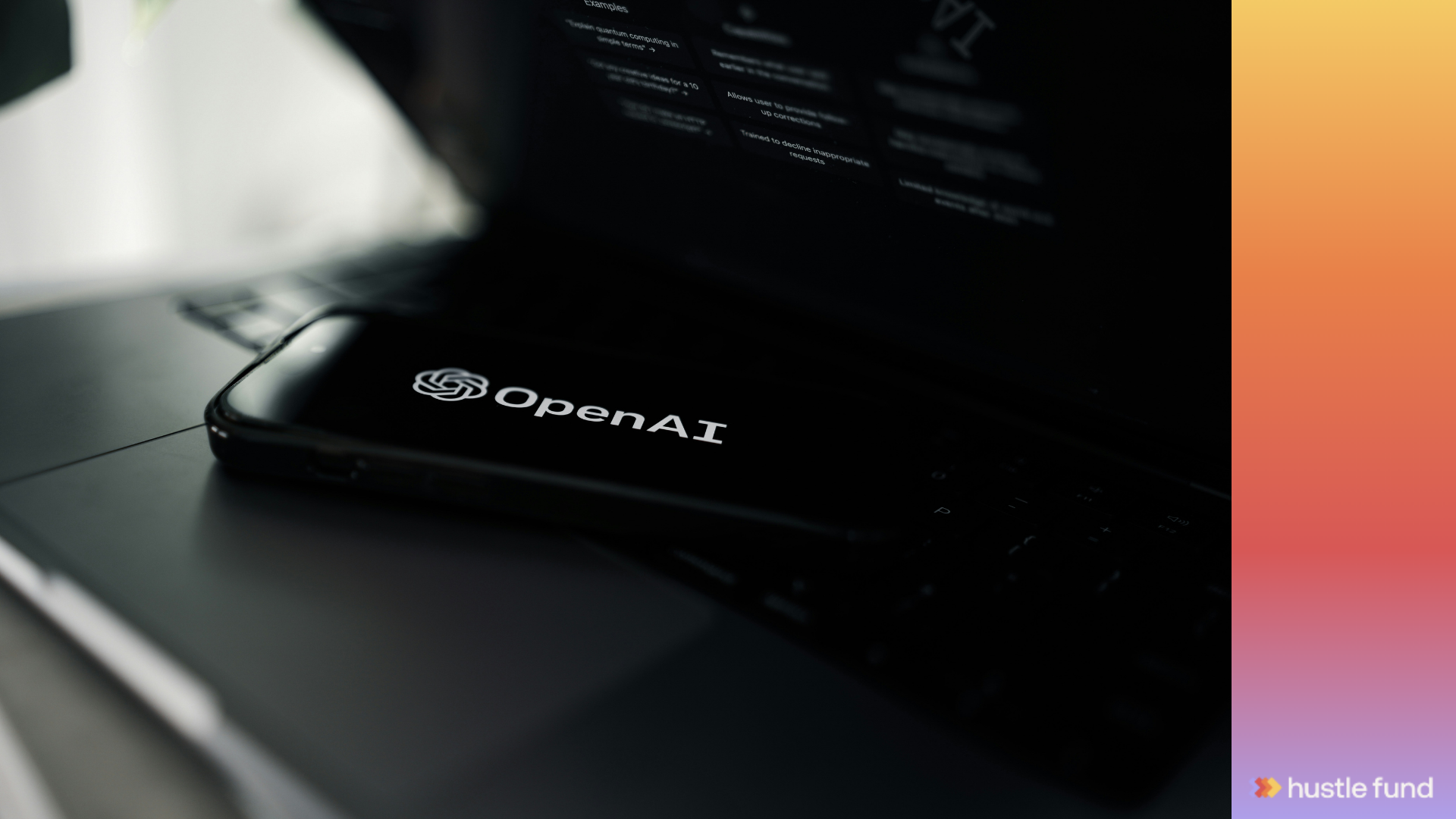
The headline wins are significant, and Angel Squad members paying attention to AI infrastructure would do well to study the pattern. Khosla Ventures was the first institutional investor in OpenAI in 2018. It led the Series A investment in Commonwealth Fusion Systems in 2019, backing the company's approach to commercial fusion energy at a time when most investors were skeptical of the timeline. DoorDash went public at a $72 billion valuation. Instacart IPO'd at $11 billion. Stripe became one of the most valuable private fintech companies in history. Affirm went public.
The firm also backed Impossible Foods, whose plant-based meat made it one of the most-funded food tech companies in the world. It invested in Rocket Lab's Series A in 2013 before the company went public in 2021. Khosla Ventures has over 1,500 investments and 196 portfolio exits documented through early 2026, with its most recent investment in February 2026 in Comp, a Brazilian HR tech startup, representing the firm's first investment in Brazil.
In October 2024, Khosla Ventures raised a $405 million special purpose vehicle specifically to invest in OpenAI, reflecting continued conviction in the company.
The "Venture Assistance" Philosophy
Khosla calls himself a "venture assistant" rather than a venture capitalist. The distinction is deliberate. Khosla Ventures offers what it describes as venture assistance: strategic guidance, operational support, CEO summits, and sector-specific mentorship designed to help founders navigate the early stages that capital alone can't fix.
Eric Bahn of Hustle Fund has made similar points about the difference between investors who write checks and investors who actually help. The Angel Squad community of 2,500-plus investors across 50-plus countries is structured around exactly that kind of value-add philosophy. Members co-invest alongside Hustle Fund GPs and participate in a learning community designed to help early-stage investors develop the judgment and network that turns a check into a genuine contribution. See more at hustlefund.vc/squad.

The AI Thesis
Khosla's public views on AI are bold even by Silicon Valley standards. He has predicted that machine learning will eliminate up to 80% of jobs within the early 2030s, driving extreme deflation and eventually enabling universal basic income. His 2024 TED talk laid out 12 predictions for the future, most involving technology and AI.
In October 2024, he published "AI: Dystopia or Utopia?", arguing that AI is transformative enough to create either outcome and that the difference depends on whether humanity builds appropriate ethical safeguards. He debated Marc Andreessen on X in March 2024 about whether AGI development should be open-source or closed-source, with Khosla arguing for closed-source given national security concerns around China.
The Personal Philosophy
Khosla has been public about his approach to risk in ways that most venture investors avoid. He has said that the best venture investments look like bad ideas to the majority of smart people at the time they are made. If a thesis is obvious, the return opportunity is already compressed. His portfolio of what he calls "science experiments" reflects that view literally: Commonwealth Fusion, QuantumScape, and Varda Space Industries are all companies that most investors would not have funded at the stages Khosla moved in.
He also has a specific view on failure. Because the firm takes high-conviction bets in capital-intensive sectors like fusion and synthetic biology, some of those bets will not work. He is comfortable with that trade-off, which requires a fund structure and LP base that shares that comfort. Not every investor can build that kind of fund. But the underlying logic, accepting higher failure rates in exchange for the possibility of transformational outcomes, is a framework that applies at every scale of early-stage investing.
What to Watch
Khosla Ventures continues to be one of the most active investors in the AI space in 2025 and 2026, tying for most active US investor in May 2025 with 12 deals in a single month. Fund XIII closed at $3.5 billion in 2024 with specific mandates around nuclear fusion, humanoid robots, and AI infrastructure. Forbes ranked Khosla #10 on its 250 Greatest American Innovators list in 2026.







.png)