
Cursor (Anysphere) Pre-IPO Shares: What Accredited Investors Should Know in 2026
.png)
Brian Nichols is the co-founder of Angel Squad, a community where you’ll learn how to angel invest and get a chance to invest as little as $1k into Hustle Fund's top performing early-stage startups
Key Takeaways
- Cursor's maker, Anysphere, set a $29.3 billion valuation in its January 2026 Series D at about $630 per share, led by Accel and Coatue. On the secondary market it trades near $641.30, a real-time market cap of about $29.81 billion, roughly a 2% premium to that round.
- Recurring revenue crossed $1 billion by the Series D, up from about $100 million a year earlier. It is one of the fastest-growing software companies on record.
- That puts Cursor at roughly 24x to 30x on confirmed ARR, or closer to 15x on Notice's higher run-rate estimate near $1.95 billion.
- The two company-level risks: dependence on frontier models it does not own and that its own suppliers also compete with, and a brutally competitive AI coding market.
- No confirmed IPO timeline. Underwrite a multi-year hold, real volatility, and the quirks of buying private shares.
Cursor is the poster child for the AI application boom. Anysphere, the company behind it, went from roughly $1 million in recurring revenue in 2023 to over $1 billion by the start of 2026, a pace that would have sounded made up a few years ago. Its valuation followed: $2.6 billion in 2024, $9.9 billion in 2025, $29.3 billion in 2026. For anyone looking at Cursor pre-IPO stock, the growth is not the question. The question is whether a wrapper on other people's models, however good, can defend that value against the most crowded competitive set in software.
Whether it is a good buy at today's price depends far less on how much you love the product and far more on how you enter: the share class, the rights, the price, and the path to liquidity.
This guide is written for the accredited investor sizing up private-market exposure, not for retail buyers waiting on a ticker. You will get how these shares actually work, what diligence matters, and what to confirm before you wire anything.
What Cursor Pre-IPO Shares Are (and What They Are Not)
Pre-IPO shares in a private company are usually existing shares sold by an employee, founder, or early investor in a secondary transaction. They are not publicly traded equity, and they carry no continuous pricing, no broad SEC reporting, and no automatic liquidity.
The primary-versus-secondary distinction matters. A primary round issues new shares and adds cash to the company. A secondary transfers ownership between private parties and funds nothing at Anysphere. One extra caution for Cursor: Notice lists its transferability as unknown, meaning the current direct-transfer rules are not established, so any buyer needs to confirm exactly what is permitted before assuming a clean transfer. Do not treat a private listing like a public quote. There is no ticker and no continuous market, only negotiated transactions with limited disclosure.
What Is the Current Valuation of Cursor?
Cursor's last primary valuation is $29.3 billion, set in the roughly $2.3 billion Series D that closed in January 2026 at about $630 per share, with Accel and Coatue leading. That was a 200% jump from the $9.9 billion Series C set in March 2025, which itself was a huge step up from $2.6 billion in 2024.
On the secondary market, shares trade near $641.30, a real-time market cap of about $29.81 billion, essentially in line with the last round at a slight premium. Unlike most private names right now, Cursor is not trading at a discount, which tells you demand for the story remains strong even after a triple-digit markup.
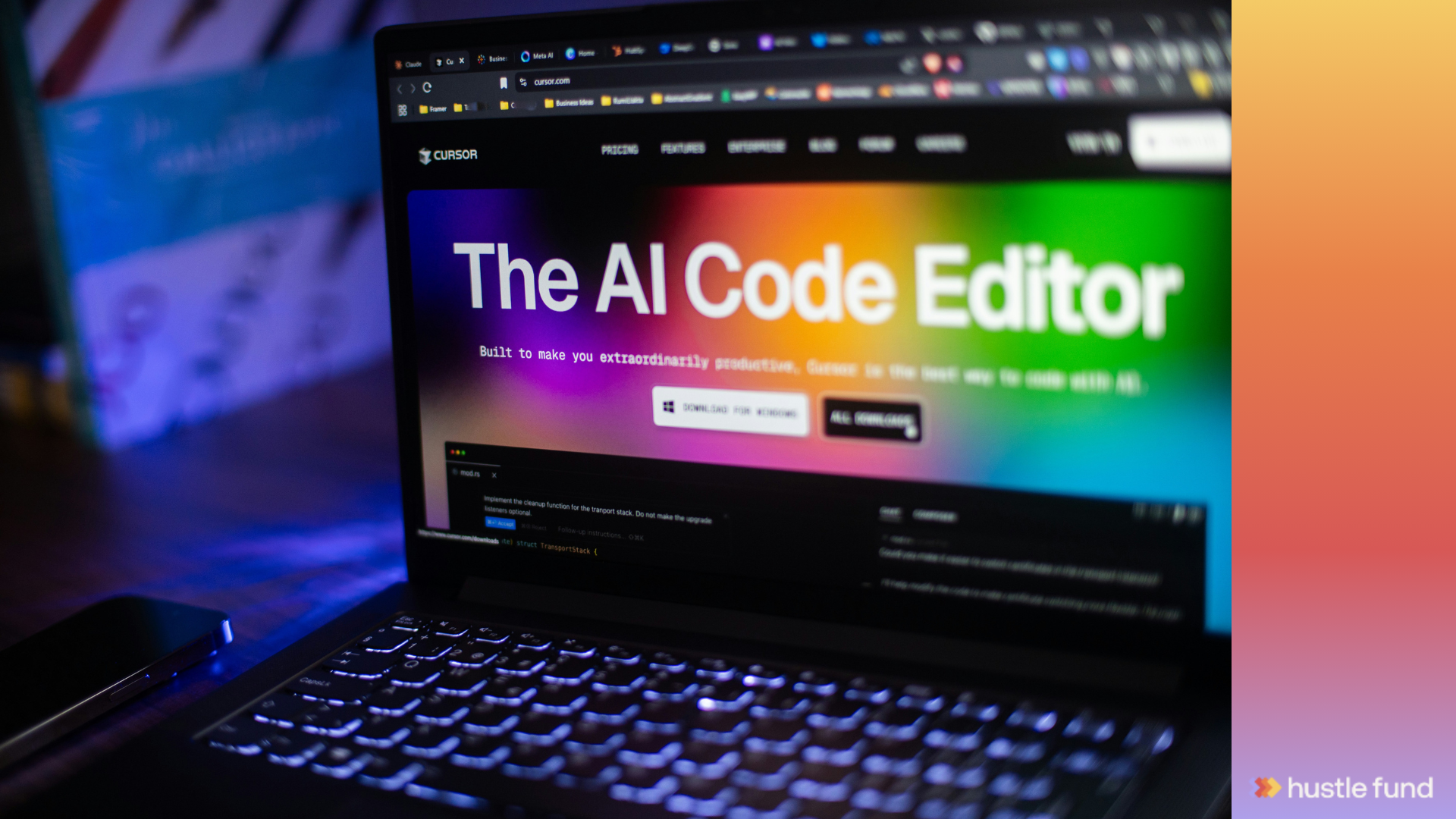
The product is an AI-powered code editor. Developers ask questions about a codebase, generate code, and apply edits across files, with AI chat and autocomplete built into the editor. Under the hood, Cursor orchestrates frontier large language models from providers like Anthropic and OpenAI rather than training its own from scratch. Founded in 2022, Anysphere employs roughly 1,400 people, with total funding of about $3.4 billion and backers including Andreessen Horowitz, Thrive Capital, Index Ventures, Benchmark, and Nvidia.
How Does Cursor Generate Revenue?
Cursor sells subscriptions to developers and engineering organizations, with paid tiers layered on top of a free entry point, plus usage-based pricing tied to heavier AI features. The land-and-expand motion is strong: individual developers adopt it, then teams and whole engineering orgs standardize on it. The company has said more than half of the Fortune 500 use Cursor, including names like NVIDIA, Uber, and Adobe.
The revenue trajectory is almost hard to believe. Recurring revenue went from about $1 million in 2023 to $100 million in early 2025, to over $500 million by mid-2025, to more than $1 billion by the Series D at the start of 2026, a figure Cursor stated directly. Notice puts a trailing run-rate closer to $1.95 billion. Revenue per employee is extraordinarily high, north of $1 million. When judging traction this fast, the durability of usage matters more than the headline, which is the point our guide on evaluating traction at the earliest stages makes.
Why Are Investors Bullish on Cursor?
The bull case is that AI-assisted coding is one of the largest and most obviously valuable applications of the current technology, and Cursor got there first and best. Developers love it, adoption inside large enterprises is real, and the product keeps expanding from autocomplete into agentic workflows that write and edit across whole codebases. The revenue velocity is the strongest evidence that this is not a toy. Being early and deeply adopted in a category the frontier labs themselves care about is part of why investors following the AI ecosystem, including names like those in our look at Sam Altman's investment portfolio, pay such close attention here.
Our very own Hustle Fund GP, Elizabeth Yin, has talked about how in hype markets, differentiation is everything, that a company needs to be 10x different and 10x better than the alternatives. Cursor's bet is that owning the editor, the workflow, and the developer relationship is that differentiator, more durable than any single model underneath it. That is a real argument. It is also the exact claim every competitor is making, which is why evaluating defensibility in a crowded field, as our piece on evaluating startups in crowded markets lays out, is the whole game.
What Are the Biggest Risks for Cursor Investors?
Two company-level risks carry most of the weight, and both go to defensibility.
Model Dependence and Platform Risk
Cursor does not own the intelligence at the core of its product. It orchestrates frontier models from Anthropic, OpenAI, and others, and those providers are also its competitors. Anthropic ships its own coding tool, OpenAI ships its own, and either could restrict access, reprice it, or simply out-build the editor layer. That is a structural vulnerability: your supplier is your rival, and your cost structure moves when they change their pricing. It is the same tension that makes wrapper businesses fragile no matter how fast they grow.
Competition and Switching Costs
The AI coding market is arguably the most contested category in software. GitHub Copilot has Microsoft's distribution, Windsurf and others are well funded, and the frontier labs are building directly into the workflow. Notably, OpenAI reportedly looked at buying Cursor before acquiring a competitor instead, a sign of how strategically contested this space is. Developer switching costs are low, and a better model or a bundled free alternative can move usage quickly. Avoiding the mental traps that come with a red-hot category is its own skill, one our note on mindset mistakes that cost you returns speaks to directly.
The Risks Investors Underprice: Liquidity, Dilution, and Information Asymmetry
Company risk gets the attention. Structural private-market risk is what actually shows up in your returns.
Liquidity risk leads. With no announced IPO, your capital could sit for years, and any listing brings lockups and volatility. Dilution is real: AI companies run large option pools to compete for scarce talent, and future financings can erode ownership even if you never sell. Information asymmetry is the seller's structural edge, since Anysphere does not file public quarterlies, so you may be buying from someone who can see churn and cohort data you cannot. Those unglamorous risks are exactly the ones our list of critical mistakes new investors make keeps flagging.
As Elizabeth has noted, valuations are not really about the worth of a company. They are about supply and demand among investors. Cursor's roughly flat-to-premium secondary tells you demand for the story is still outrunning the available supply of shares, even after the valuation tripled. That is a strong signal, but in a hype market it can flip fast if a competitor lands a blow or growth cools, and the same enthusiasm that holds the price up today can drain out quickly.
What the Numbers Actually Say
Here is the math, cleanly.
The last primary round priced at about $630 per share for a $29.3 billion valuation in January 2026. On the secondary market as of early June 2026, Cursor trades near $641.30, a real-time market cap of about $29.81 billion, roughly a 2% premium to that round. No discount to interrogate here; the market is paying at least full price.
On revenue, use the figure the company itself confirmed: over $1 billion in recurring revenue by the Series D. Against the $29.3 billion round, that is roughly 29x. Against Notice's higher trailing run-rate near $1.95 billion, it compresses to about 15x. For a company that grew revenue more than tenfold in a year, even 29x is not obviously absurd by the standards of this AI cycle, and 15x on the run-rate is almost reasonable. The catch is that the multiple only works if growth stays extraordinary and gross margins hold up, and gross margins are a live question when a large share of cost is inference paid to the very model providers Cursor competes with. If growth decelerates or model costs rise, both the numerator and the denominator move against you.
The quarter-by-quarter secondary prints show real volatility: shares more than doubled into late 2025, gave back ground into early 2026, then rallied back toward $641. Cursor has not disclosed profitability, so the case rests entirely on growth and future margins, not an earnings floor. Running any deal through a disciplined checklist, like our checklist for evaluating startup investments, is the sane way to keep the story from doing the work the numbers should.
The Diligence That Actually Matters: Terms Every Buyer Should Understand
The myth is that a price near the last round means you are getting a fair deal. In practice the terms decide your outcome: the cap table and your fully diluted ownership; share class, since common and preferred at the same valuation can pay out very differently; liquidation preference, which can leave common with little in a middling exit; the option pool, a large and quiet source of dilution in AI companies; the 409A valuation, which can sit below a secondary price; information rights, which common holders often lack and which matter a lot when churn is the key unknown; pro rata rights, which most secondary buyers do not get; right of first refusal and transfer restrictions, especially given Cursor's unclear transfer rules; and lockup, since your liquidity event is lockup expiration, not the listing. If a seller or platform cannot explain these for the specific shares on offer, that opacity is the risk.
Eligibility and Compliance
Most direct private offerings are limited to accredited investors, based on income, net worth, or credentials. Qualified purchaser status can matter when a deal runs through a pooled fund. Regulation D governs how most of these deals are offered, with Rule 506(b) limiting solicitation and Rule 506(c) allowing broader marketing but requiring stricter verification. The compliance steps, KYC and AML, source-of-funds review, broker-dealer involvement, and escrow, are protective infrastructure. If you are earlier in the journey, the education that gets you to a confident first deal is a better starting point than a hot secondary.
Deal Mechanics: Direct Secondaries, SPVs, Forward Purchases, and the Fee Stack
A direct secondary would give you ownership of the shares, subject to company approval, though Cursor's transfer rules are not clearly established. An SPV gives you exposure through a pooled vehicle, which simplifies administration but adds fees and reduces governance and visibility.
Two structures warrant extra caution. The first is a forward purchase contract, where you buy a promise to deliver shares or their value at a future event rather than the shares themselves. That creates synthetic exposure and counterparty risk: if the seller cannot deliver or the transfer never clears, you hold a claim, not stock. The second is a second- or third-layer SPV, a vehicle investing in another vehicle, stacking fees and carry at each layer and pushing you further from the cap table. Ask how many layers sit between your money and Anysphere's equity, and price each one. Your all-in cost is rarely just the share price; the spread, platform fees, commissions, legal review, and SPV overhead add up. An indication of interest is not an allocation, and deals fail for boring reasons, so do not anchor until cash and shares settle.
Where Accredited Investors May Access Cursor Shares in 2026
Access comes through a few channels. Secondary platforms like Hiive, Forge Global, EquityZen, UpMarket, and Notice list AI names including Cursor, with prices varying enough to make comparing quotes and reading share-class terms worthwhile. Pre-IPO funds offer diversified AI exposure with less control over any single name. Public proxies are indirect through Cursor's backers such as Nvidia. And angel investing communities occasionally surface SPV access to growth-stage AI deals.
A Note on Research Sources
Research sites can frame valuation narratives and sentiment, but they are not standardized quote systems. Private prices are negotiated snapshots. Cursor's revenue milestones are unusually well documented because the company publishes them, but churn, gross margin, and net retention, the numbers that actually determine durability, are not public. Weight what you can verify and discount the rest.
How This Differs From Early-Stage Venture Access
Late-stage AI secondaries are a different discipline from early-stage venture. Platforms like AngelList and SeedInvest and accelerators like Y Combinator and Techstars build real skill in evaluating founders and product-market fit. A $29 billion AI secondary is not that. You are underwriting price, share class, and defensibility rather than a founder bet. Still, the discipline transfers, and the same evaluation muscle applies at every stage.
Liquidity, Lockups, and Exit Paths
Private shares can exit through several paths: an acquisition, a tender offer, a direct listing, a conventional IPO, or more years private. Cursor has given no signal of an imminent listing, so underwrite a multi-year hold and the possibility that interim liquidity comes through tender offers or selective windows. Position sizing beats conviction in a long-duration, volatile private asset, especially one whose defensibility is still being tested.
Bottom Line
Cursor is a genuinely remarkable company: the fastest revenue ramp software has seen, deep enterprise adoption, and a product developers love. It is also a business built on models it does not own, competing against Microsoft, the frontier labs, and a field of well-funded rivals, at a rich multiple with churn and margins still unproven. Whether it is a good buy for you depends less on how impressive the growth is and more on how you enter: the right share class, a defensible price, sized sensibly, with clear assumptions about liquidity and defensibility.
Getting that read right is easier when you can see the whole spectrum, from early rounds to late-stage AI secondaries like this one. That is what Angel Squad is for. It is a community of more than 2,500 accredited investors across 50-plus countries who have collectively invested over $30 million into 70-plus startups, with deal flow spanning pre-seed through pre-IPO. Members get access to the top 1% of deal flow alongside Hustle Fund's GPs, a real no-a-holes policy, and the shared judgment that keeps you honest on exactly these calls. If that is the edge you want, take a look at hustlefund.vc/squad. The investors who do best in private markets stay allergic to hype, read the documents, and remember that structure often matters as much as story.
Frequently Asked Questions
Is Cursor publicly traded? No. Cursor is built by Anysphere, a private company with no ticker symbol. Accredited investors can access shares through secondary platforms like Hiive, Forge Global, EquityZen, UpMarket, and Notice, through pre-IPO funds, or through angel investing communities that occasionally source SPV access, subject to confirming the company's transfer rules.
What is Cursor's current valuation? Anysphere's last primary valuation was $29.3 billion, set in its January 2026 Series D at about $630 per share, led by Accel and Coatue. On the secondary market it trades close to a $29.8 billion market cap.
How much revenue does Cursor generate? Cursor stated it crossed $1 billion in recurring revenue by its Series D, up from about $100 million a year earlier. Notice estimates a trailing run-rate closer to $1.95 billion. Either way, it is one of the fastest-growing software companies on record.
Is Cursor profitable? Anysphere has not disclosed profitability. A large share of its cost is inference paid to model providers, so gross margins are a key open question, and the investment case rests on continued growth rather than a demonstrated earnings floor.
How can accredited investors buy Cursor stock? Through secondary platforms, pre-IPO funds, and angel investing communities that source SPV access. Each path carries different minimums, fees, compliance steps, and information rights. Confirm the company's transfer rules, and verify share class and right-of-first-refusal language before transacting.









.png)