
How to Angel Invest When You're Not Rich or Connected
.png)
Brian Nichols is the co-founder of Angel Squad, a community where you’ll learn how to angel invest and get a chance to invest as little as $1k into Hustle Fund's top performing early-stage startups
Traditional angel investing required both wealth (hundreds of thousands to invest) and connections (personal networks for deal flow). Modern infrastructure changed both requirements fundamentally.
Here’s how to angel invest successfully without traditional advantages.
Redefining "Rich" for Angel Investing
Traditional requirement was $500,000-1,000,000 total capital at $25,000-50,000 per investment. This excluded virtually everyone except wealthy elite who had accumulated significant liquid assets.
Modern requirement is $15,000-20,000 total capital at $1,000 per investment. This is accessible to successful professionals earning $150,000-300,000 annually who meet accreditation thresholds.
You still need accredited status: $200,000 annual income ($300,000 jointly) OR $1,000,000 net worth excluding primary residence. This is substantial but far from "rich" in popular sense of private jets and vacation homes.
Examples of people who qualify: Mid-career engineer earning $220,000, management consultant earning $250,000, dual-income couple each earning $160,000, doctor earning $280,000. These are successful professionals, not millionaires in the way most people imagine.
As Elizabeth Yin, co-founder and GP of Hustle Fund, explains: "My biggest learning (that I wish I'd learned in my 20s) was that there are a LOT of angel investors in Silicon Valley who are investing $1k checks. Previously, I'd thought that you need to be investing $25k+ checks in order to be an angel investor."
Understanding $1,000 minimums exist changes perception of required wealth entirely.
How $1,000 Minimums Actually Work
SPV aggregation makes small checks meaningful. Twenty investors contributing $1,000 each creates $20,000 investment. Founders take this seriously because total capital matters, not individual check sizes.
You receive proportional ownership through SPV structure. Your $1,000 buys same terms as larger investors, just smaller ownership percentage of typically 0.01-0.05%.
The economics work through massive valuation increases. $1,000 investment at $10 million valuation is 0.01%. If company exits at $200 million, your 0.01% is worth $20,000 (20x return before dilution).
Legitimacy is established. Communities like Angel Squad prove model works with thousands of members making $1,000 investments successfully. This isn't experimental approach but standard practice in 2026.
Replacing Networks with Professional Curation
Traditional model required deal flow through personal networks. You invested in founders you knew from work, school, or social connections. Without networks, you couldn't access quality opportunities at all.
Modern model provides professionally curated deal flow through communities. Hustle Fund screens 1,000+ monthly applications and surfaces best opportunities to members regardless of who they know personally.
Quality advantage exists with professional screening. Networks include obligation investments in friends' mediocre companies. Professional curation filters systematically for quality without social pressure.
Geographic independence is now real. Curated pipeline distributes deals globally. Member in rural Montana sees same opportunities as member in San Francisco. Location and connections are simply irrelevant.
As Eric Bahn, co-founder and GP of Hustle Fund, emphasizes: "For beginners, a bigger startup portfolio is better. It helps with diversification and helps you learn and get reps in. Investing requires practice like everything else."
That practice happens through community infrastructure, not personal networks you spent decades building.
Virtual Operations Eliminate Geography
Traditional requirement meant living in Silicon Valley, New York, or other tech hubs. Local events, proximity to founders, and in-person deal flow were essential for participation.
Modern reality is everything happens digitally. Deal flow arrives via email. Educational programming occurs via Zoom. Investment execution happens electronically. Portfolio management happens through platforms.
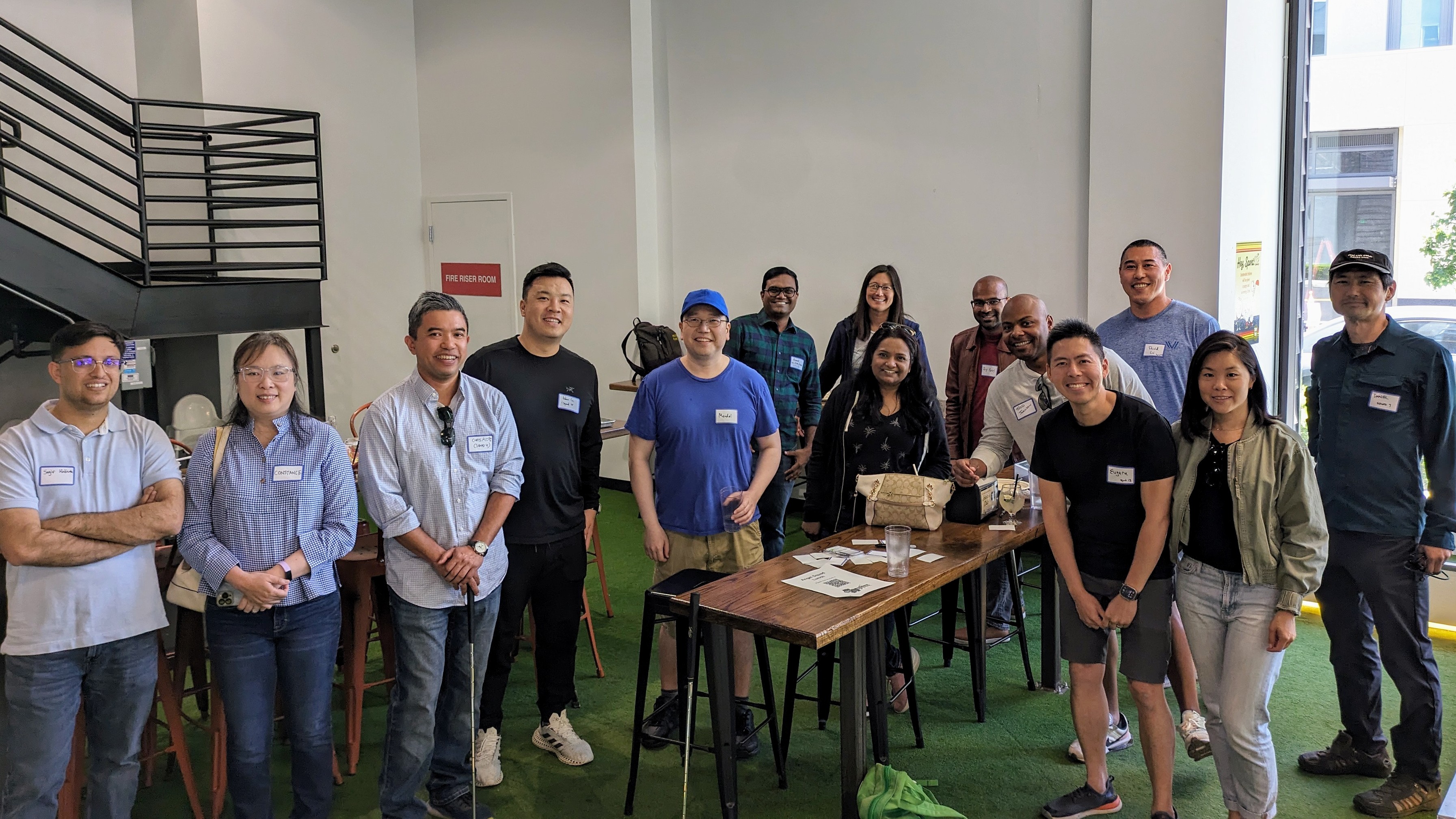
Angel Squad's 2,500+ members across 40+ countries demonstrate this reality. Members in Cape Town, Mumbai, London, and rural US towns access same opportunities and education as members in tech hubs.
For individual angels building portfolios, geographic location simply doesn't matter anymore. Your home office works as well as coworking space in San Francisco.

Building Networks Forward
Traditional approach required years building networks before you could invest. Meet founders, attend events, cultivate relationships. Only after network development could you access opportunities.
Modern approach inverts this completely. Invest first through community infrastructure. Networks develop as byproduct of having investments and participating in ecosystem.
Timeline is compressed dramatically. After 12 months and 6-8 investments, you know dozen founders and helped few portfolio companies. After 24 months, you have substantive network. After 36 months and 20 investments, your network rivals many longtime angels.
These forward-built networks are often stronger because they're based on actual value provided, not social proximity. Founders remember investors who helped when companies struggled.
Leveraging Domain Expertise
You don't need tech industry background. You need expertise in something valuable for evaluating startups in related areas.
Healthcare professional can evaluate health tech better than generic investors. Your knowledge about delivery, reimbursement, and regulation matters more than knowing people at venture firms.
Financial services veteran understands fintech opportunities and risks deeply. This expertise is more valuable than having Stanford MBA or working at Google.
Whatever your professional background provides lens. Manufacturing, retail, education, government, logistics. All provide perspective for evaluating startups in related domains that generalists lack.
Starting strategy concentrates 60-70% of early investments in your domain while maintaining 30-40% diversification. This leverages expertise advantage while building general pattern recognition over time.
Community Infrastructure as Equalizer
Quality communities completely level playing field between connected insiders and unconnected outsiders. The infrastructure matters more than personal advantages.
What communities provide: professionally curated deal flow you can't source independently, structured education that's systematic rather than informal mentorship, operational infrastructure handling SPV creation and paperwork, and peer network of other investors at similar stages.
Evaluation criteria when choosing community: Are opportunities professionally screened before presentation? Does education teach proven frameworks? Are costs transparent? Do unconnected members succeed demonstrably?
Warning about member-sourced communities: Some rely on members bringing deals. These favor connected investors. Avoid them. Choose communities with institutional pipelines that don't depend on your network.
Competing Against Connected Investors
Connected investors retain some advantages. They might see opportunities slightly earlier, get more founder attention, and provide better introductions through their networks.
Your competitive strategy focuses on portfolio construction over picking winners. Make 20 investments at $1,000 each. Connected investor might make 15 at $5,000 each. Your broader diversification compensates for their superior selection.
Emphasize systematic evaluation rather than relationship shortcuts. Connected investors sometimes rely on "I know this founder" shortcuts that backfire when relationships cloud judgment. You're forced to evaluate systematically, often producing better decisions.
Provide value through expertise rather than connections. Domain knowledge about healthcare, finance, or logistics is valuable regardless of who you know. You know more about specific areas than generalists.
As Shiyan Koh, co-founder and GP of Hustle Fund, notes: "Great founders can look like anyone and come from anywhere."
Supporting those diverse founders doesn't require being wealthy or connected. It requires meeting basic requirements and having systematic approach.
Affordability for Non-Rich Professionals
$20,000 over three years breaks down to $6,000-8,000 annually. For someone earning $200,000, this is 3-4% of gross income. Meaningful but manageable.
Strategies making it achievable include reducing discretionary spending ($700 monthly from dining, entertainment, travel), using annual bonuses by allocating portion to angel investing, and delaying major purchases like postponing car upgrade one year.
Geographic cost of living matters significantly. $200,000 in expensive city provides less discretionary income than $200,000 in affordable area. Consider whether your location affects practical ability to allocate capital.
The honest test: After all obligations (fixed costs, retirement, emergency fund), do you have $700 monthly surplus for high-risk investing? If yes, it's affordable. If no, it's not regardless of gross income.
The Honest Reality
You can angel invest without being rich or connected if: You meet accreditation ($200,000 income or $1,000,000 net worth), you have $15,000-20,000 surplus capital over 2-3 years, you can commit 3-5 hours weekly consistently, you value learning and networks as much as returns, and you're comfortable with modest outcomes over long timeline.
This describes successful professionals meeting qualification thresholds. Not wealthy elite but qualified participants nonetheless.
Angel Squad enables outsider success: $1,000 minimums eliminate wealth barrier, curated deal flow from Hustle Fund's pipeline eliminates connection barrier, virtual operations eliminate geographic barrier, structured education eliminates mentorship barrier, and demonstrated success of diverse members proves model works.
You don't need to be rich or connected. You need realistic expectations about modest outcomes and willingness to participate systematically over years.











.png)