
Syndicate Investing Explained: How Angel Communities Pool $1K-$100K Checks
.png)
Brian Nichols is the co-founder of Angel Squad, a community where you’ll learn how to angel invest and get a chance to invest as little as $1k into Hustle Fund's top performing early-stage startups
Back in 2010, if you wanted to angel invest in startups, you needed three things. $100,000 minimum, connections to founders, and honestly, you probably needed to be a white dude on Sand Hill Road. That world is dead.
Today, about 2,000 people from 40+ countries are actively investing checks as small as $1,000 into pre-seed startups through angel investing communities like Angel Squad. Doctors in Miami. Product managers in Singapore. A chef in Turkey. They're all backing the same deals that venture capitalists are funding.
The mechanism making this possible? Syndicate investing.
What Syndicate Investing Actually Means
A syndicate is just a group of investors who pool their money to invest together in a single startup. Think of it like crowdfunding, but instead of backing a Kickstarter campaign, you're buying actual equity in a company.
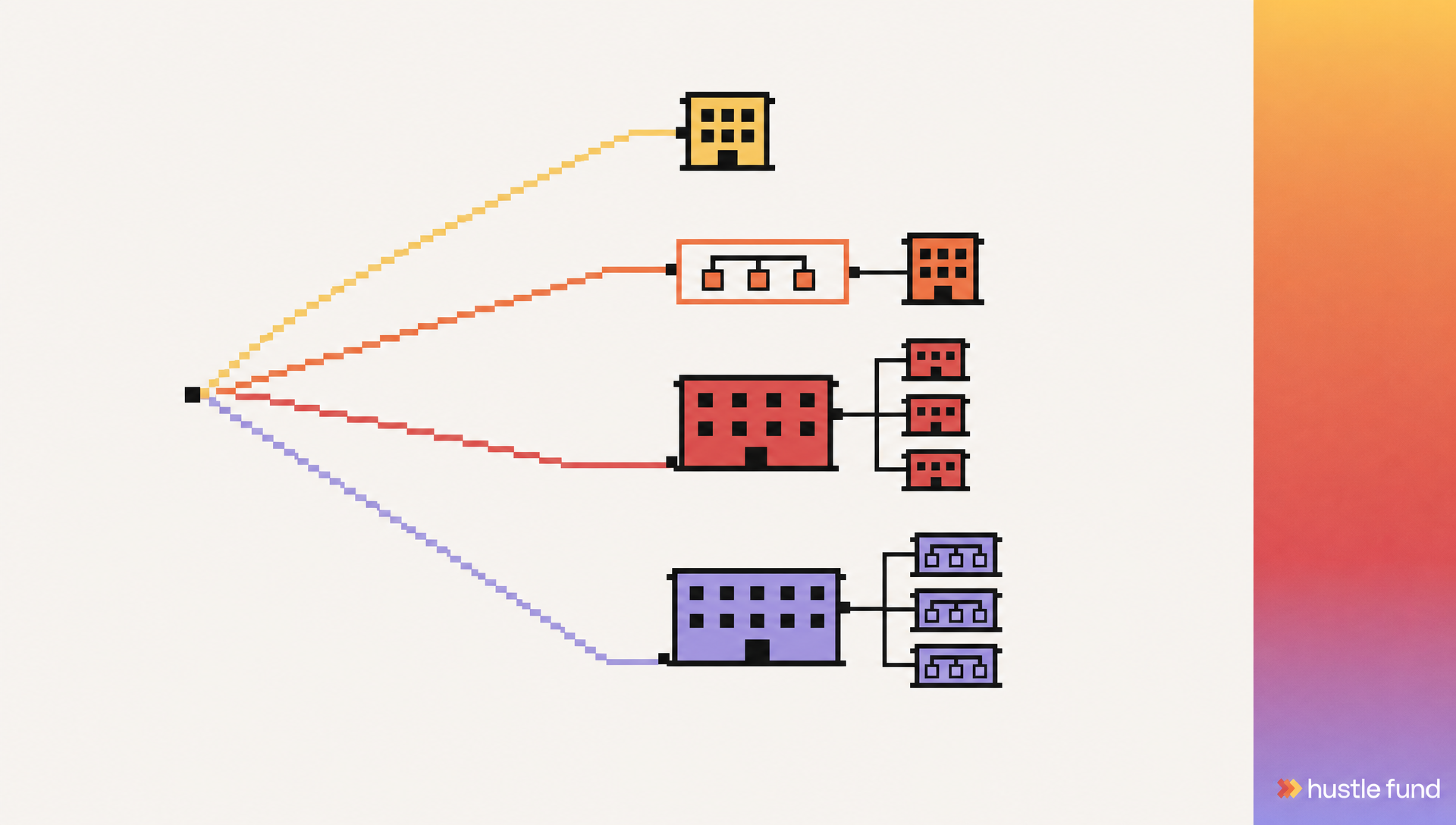
Here's how it works in practice. A lead investor (usually someone with experience or a VC fund) sources a deal and does the due diligence. They negotiate terms with the founder. Then they open up the investment to their network, and other investors can participate with smaller check sizes.
The startup gets one wire transfer and one line on their cap table instead of managing 50 individual small investors. The investors get access to a deal they never would have found themselves. Win-win.
The Math That Changed Everything
Traditional angel rounds worked like this: 10 wealthy individuals each write $50,000 checks, and the startup raises $500,000. Simple, but it meant you needed serious capital to play.
Syndicates flipped the script. Now you might have one lead investor putting in $50,000, and 50 other investors contributing $1,000 to $5,000 each. Same $500,000 raised, but suddenly 51 people are involved instead of 10.
The economics make sense for everyone. Startups still get meaningful funding. Investors can build a diversified portfolio without needing $500,000 in capital. And honestly, having 50 investors who are genuinely excited about your product beats having 10 rich folks who are just looking for returns.
How Angel Investing Communities Use Syndicates
Most angel investing communities operate by screening hundreds or thousands of deals monthly, then sharing the best opportunities with their members through syndicated investments.
Take Angel Squad's model. Hustle Fund reviews over 1,000 pitches every month (yeah, that's a lot of pitch decks). They invest in maybe 2-3 of those. Then they share those same deals with Angel Squad members, who can invest as little as $1,000 on the exact same terms Hustle Fund negotiated.
Members aren't just writing checks blindly though. They attend live pitch sessions where founders present. They hear from the GPs about why they're investing. They can ask questions directly. Then they decide if they want in.
The structure typically uses SPVs (Special Purpose Vehicles) managed through platforms like AngelList. One SPV per deal. You invest what you want. The platform handles all the admin, legal docs, and wire transfers. You get your ownership percentage. Done.
.jpeg)
Why This Model Works Better Than Going Solo
If you tried to angel invest on your own, you'd need to source deals (hard), evaluate them (harder), negotiate terms (hardest), and then hope you picked winners. That's a full-time job.
Angel investing communities solve all three problems. They source deals through their existing networks. They provide education on how to evaluate startups. And they negotiate terms with the collective power of the entire community behind them.
The learning curve is real. When you invest through a community, you're seeing how experienced investors think. You hear their questions during due diligence. You understand what made them say yes or no. That knowledge compounds fast.
Plus, the math of diversification works in your favor. If you have $10,000 to invest, you could write one $10,000 check to a single startup (terrifying) or ten $1,000 checks to ten different startups (much smarter). Syndicates make that diversification actually possible.

What Check Sizes Actually Look Like
The range varies wildly depending on the community and the specific deal. Angel Squad typically sees members investing $1,000 to $5,000 per deal. Some investors go higher if they really love the company.
Over time, as members get more comfortable and successful with their investments, those check sizes naturally grow. Someone who started writing $1,000 checks might be writing $10,000 checks two years later. It's an onramp, not a destination.
The key is you control your own pace. No one's forcing you to invest in every deal. Some members invest in one deal per quarter. Others invest in five deals per month. Your capital, your call.
Getting Started With Syndicate Investing
Most angel investing communities work on a membership model. You pay a quarterly or annual fee to access the community, education, and deal flow. Then you separately decide which deals to invest in.
The membership fee is separate from your actual investments. Think of it like a gym membership. You pay for access, then you decide how much you want to work out.
One important note: you typically need to be an accredited investor to actually write checks. Some communities like Angel Squad will even reimburse you for taking the Series 65 exam, which is an alternative path to accreditation if you don't meet the income or net worth requirements.
The Community Part Matters More Than You Think
Yes, the deal flow is valuable. But the real unlock is being surrounded by other investors learning the same things you are.
You're in Slack channels discussing term sheets. You're on Zoom calls hearing how other people think about market sizing. You're meeting people for coffee in your city who've already made 20 angel investments and are happy to share what they learned.
This network effect is what separates angel investing communities from just being a deal newsletter. The knowledge sharing is constant. Someone asks a question about pro-rata rights, and three people with legal backgrounds jump in to explain. That's worth the membership fee alone.
The connections often lead to other opportunities too. Members start syndicates together. They introduce each other to founders. They collaborate on due diligence. The community becomes your unfair advantage.





.png)



.png)